

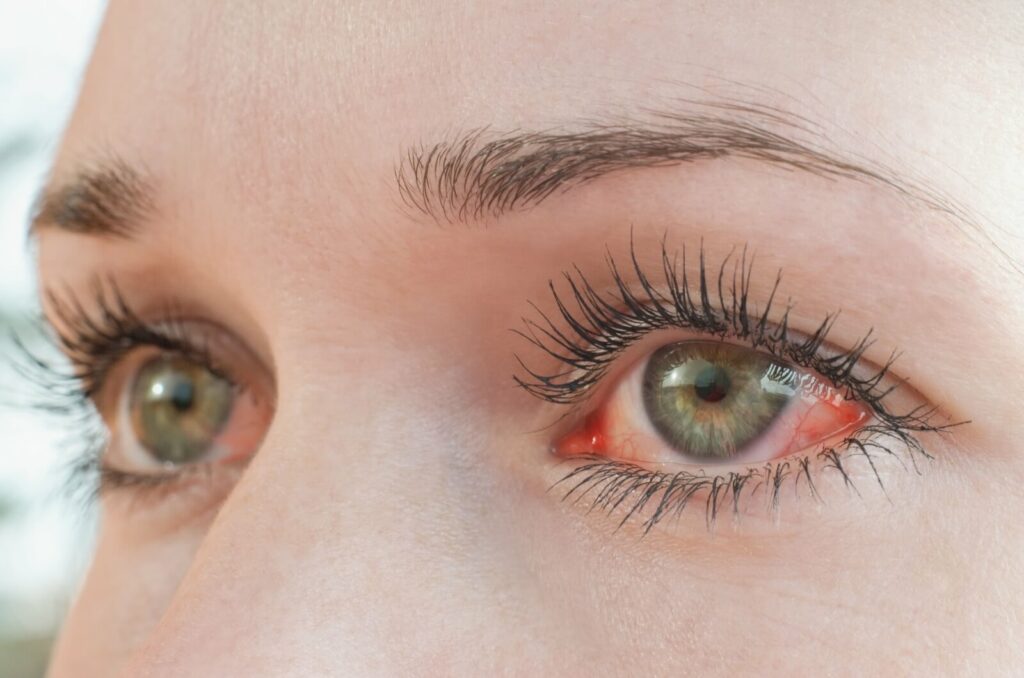
Plenty of people live with dry, irritated eyes for months before they mention it to anyone. They reach for drops, rub their eyes, and hope it passes. In many cases, the problem starts with the oil your eyelids add to your tear film.
That oil comes from a set of tiny glands, and when they stop working the way they should, it’s called meibomian gland dysfunction, or MGD. It’s one of the conditions we see often in our dry eye center. MGD is usually a long-term condition that can last for years without treatment, though ongoing care can help you manage symptoms and protect your glands over time.
What Is Meibomian Gland Dysfunction?
Your eyelids hold rows of tiny oil glands along their edges. Each time you blink, they release a small amount of oil that spreads across your eye.
This oil forms the outer layer of your tears. It slows evaporation, so your eyes stay moist between blinks.
With MGD, the oil thickens or the gland openings get clogged. Your tears then dry up faster than they should, and the surface of your eyes can become irritated.
Signs to Watch For
Symptoms often come and go, and many people notice them more toward the end of the day. Watch for a few of these:
- A burning feeling in your eyes
- A gritty sensation, as if something’s stuck under your eyelid
- Redness along the edges of your eyelids
- Swollen eyelids
- Blurry vision that clears when you blink
Who’s More Likely to Get Meibomian Gland Dysfunction
MGD can affect anyone, but it becomes more common with age. Adults who spend long hours on a screen often feel it first, since people tend to blink less when they focus on something close.
People with rosacea may be more likely to develop it. So can people going through hormonal changes, such as menopause. And if you wear contact lenses, you may notice symptoms sooner than people who don’t.
How Long Symptoms Can Stick Around
Without treatment, MGD often lasts for years. Symptoms tend to build slowly. Because of that, many people get used to the discomfort and assume their eyes are tired from a busy week.
Inflammation along the eyelid can keep the glands blocked, so symptoms keep coming back. Over time, glands that stay clogged may shrink or stop working for good.
That’s why your optometrist looks closely at your glands during an exam. They may take pictures of the inside of your eyelids to see how the glands look and whether any have started to shrink.
What Makes Meibomian Gland Dysfunction Worse
Some habits and surroundings can turn mild symptoms into daily frustration. Keep an eye on these:
- Dry indoor air from furnaces, space heaters, or air conditioning
- Long stretches on a screen without blink breaks
- Smoking, which can irritate your eyes and affect your tear film
- A diet that’s low in healthy fats, like the omega-3s in fish and flaxseed
Car vents count too. If air blows straight at your face while you drive, angle the vents down.

Treatment Options
Treatment usually starts at home. If your glands need more help, your optometrist can add in-office care.
Hold a warm compress over your closed eyes for about 10 minutes to soften thickened oil. Then clean along your lash line with a lid wipe or a mild cleanser. Eyelid hygiene only takes 1 or 2 minutes and can limit buildup where the glands open.
Home care can ease discomfort. Still, it may not reach hardened oil deep inside the glands. For that, your optometrist may recommend an in-office treatment such as:
- LipiFlow, which applies gentle heat and pressure to help clear blockages
- Intense pulsed light (IPL), which can help calm inflammation along the eyelids
- Low-level light therapy (LLLT), which uses light to gently warm the eyelids
What to Expect From a Treatment Plan
Your plan depends on your symptoms and what your optometrist finds during testing. Some people feel relief within a few weeks. Others need a few months of steady care.
Plan on follow-up visits. They give your optometrist a chance to check your glands and adjust your care as your eyes respond.
Give Your Eyelid Glands Some Attention
Regular eye exams catch small changes before you feel them, and that matters with a condition so gradual. Between visits, a humidifier in the bedroom, steady hydration, and short blink breaks during screen work all support your tear film.
Gritty, tired eyes don’t have to be part of your routine. Our team at Higgins Brothers’ Vision Care can examine your glands and build a care plan around how your eyes feel day-to-day. Book an appointment, and we’ll take a closer look together.