
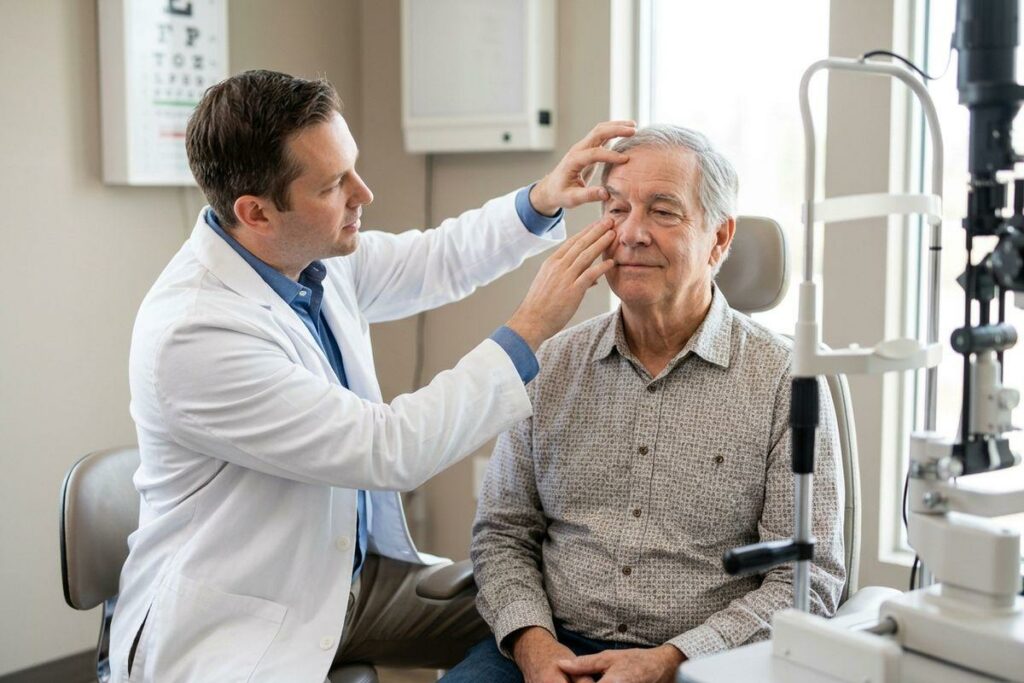
Droopy eyelids can affect more than your appearance. While it’s true that a heavy feeling above your eyes can make you look tired even after a full night of sleep, it can start blocking your line of sight, making reading a book or driving at night difficult. Sagging skin around the eyes often happens naturally over time, but surgery isn’t your only option for relief.
You can manage droopy eyelids without surgery by using prescription eye drops, practicing targeted facial exercises, and exploring in-office treatments like OptiLift. These approaches provide practical ways to open up your field of vision and support your delicate skin.
What Causes Eyelids to Droop?
Knowing why your eyelids sag helps you choose the right management strategy.
Age and Natural Muscle Changes
As time passes, the levator muscle responsible for holding your eyelid up naturally loses some of its strength. Regular eye exams help monitor these changes over time.
Your skin also produces less collagen as you age. This change can make the delicate tissue around your eyes stretch and sag. Sometimes, a simple lack of specific vitamins contributes to this muscle fatigue.
Daily Habits and Lifestyle Factors
Your daily routine directly affects how your eyes look and feel.
Staring at bright phone screens for hours exhausts the small muscles around your eyes. A lack of regular sleep prevents these muscles from recovering overnight. Furthermore, stepping outside without sunglasses leaves your eyelids exposed to harmful ultraviolet rays that can damage sensitive skin fibers.
Signs To Watch For
You might notice physical changes before your vision becomes compromised. Watch for these common signs:
- A noticeable heavy sensation resting on your upper lashes.
- Struggling to keep your eyes fully open during evening hours.
- Skin physically blocking the top portion of your vision.
Prescription Eye Drops For A Quick Lift
There are topical solutions to help lift heavy lids. These drops provide an alternative to invasive procedures.
A daily drop applied directly to the eye can offer temporary relief from visual obstruction. Active ingredients target the specific receptors in your eyelid muscles. The medication triggers a gentle contraction that raises the lid, subtly widening your eyes for 6 to 8 hours.
Who Can Benefit From Drops
An optometrist will evaluate your eyes to determine if this treatment matches your condition. These drops may help if you meet any of the following criteria:
- Adults experiencing acquired ptosis from natural aging.
- People seeking a simple addition to their morning routine.
- Individuals whose droop comes from muscle weakness rather than excess skin.
Facial Exercises To Tone Eyelid Muscles
Working out your facial muscles provides mild support for sagging skin as regular movement encourages healthy blood flow to the area.
Gentle Eyelid Massage
A short massage routine relaxes tense facial muscles and prepares your skin for targeted exercises:
- Place a warm washcloth over your closed eyes for 3 to 5 minutes.
- Use your ring finger to rub your lids in a light circular motion.
- Keep your touch very soft to avoid stretching the delicate tissue.
Eye Movement Workouts
Targeted stretches train the levator muscle to function more efficiently. Try this quick routine:
- Keep your head completely still while looking up, down, left, and right.
- Raise your eyebrows high and hold the pose for 5 to 10 seconds.
- Blink rapidly for a few moments to engage the surrounding muscle groups.
Nonsurgical Treatments with OptiLift
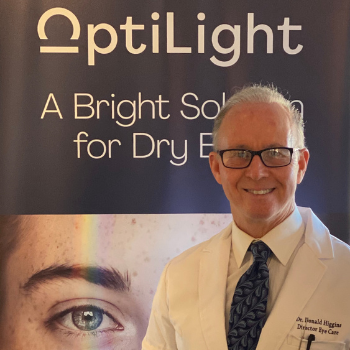
As technology advances, we’re finding more gentle ways to rejuvenate tired eyes. OptiLift offers a practical approach for those wanting noticeable support without long recovery times. This in-office procedure uses precise techniques to target deep tissue layers and deliver focused energy to support eyelid skin.
The process gently firms the area for a refreshed appearance. You can return to your normal daily activities immediately after the visit.
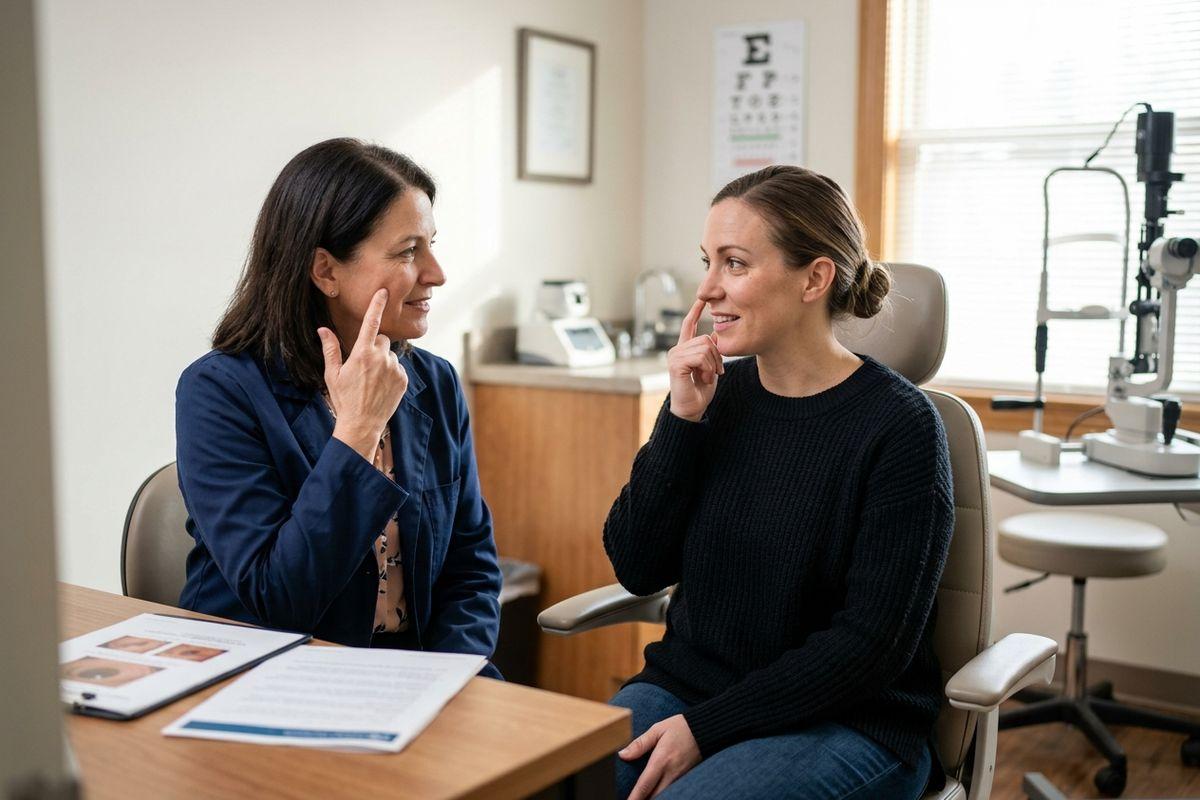
Choosing a noninvasive route provides steady improvements over time. Your optometrist can adjust the approach based on how your skin responds.
The subtle tightening effect protects the delicate eye areas from further sagging, while the energy encourages fresh collagen production for long-term support. The entire process is customized based on your unique cosmetic goals.
Knowing When to Visit Your Optometrist
Noticeable changes to your eyelids benefit from professional attention. A droopy lid can sometimes point to deeper health issues that need an evaluation. Schedule a comprehensive exam and get a clear picture of your ocular health.
Your optometrist evaluates your eyelid muscle function to determine the severity. We can identify underlying health conditions that might contribute to the droop. You receive personalized advice tailored to your specific vision needs.
Our team assesses your overall eye health before making suggestions, so you can build a practical routine that fits smoothly into your lifestyle.
Finding Your Path to Lighter Eyes
Fixing droopy eyelids doesn’t always mean jumping straight to surgery. Finding the right approach to heavy eyelids improves your daily comfort without invasive treatments.
Our knowledgeable staff at Higgins Brothers’ Vision Care provides optical solutions and therapies to support your overall vision. Reach out today to schedule your consultation and explore your nonsurgical options for droopy eyelids.